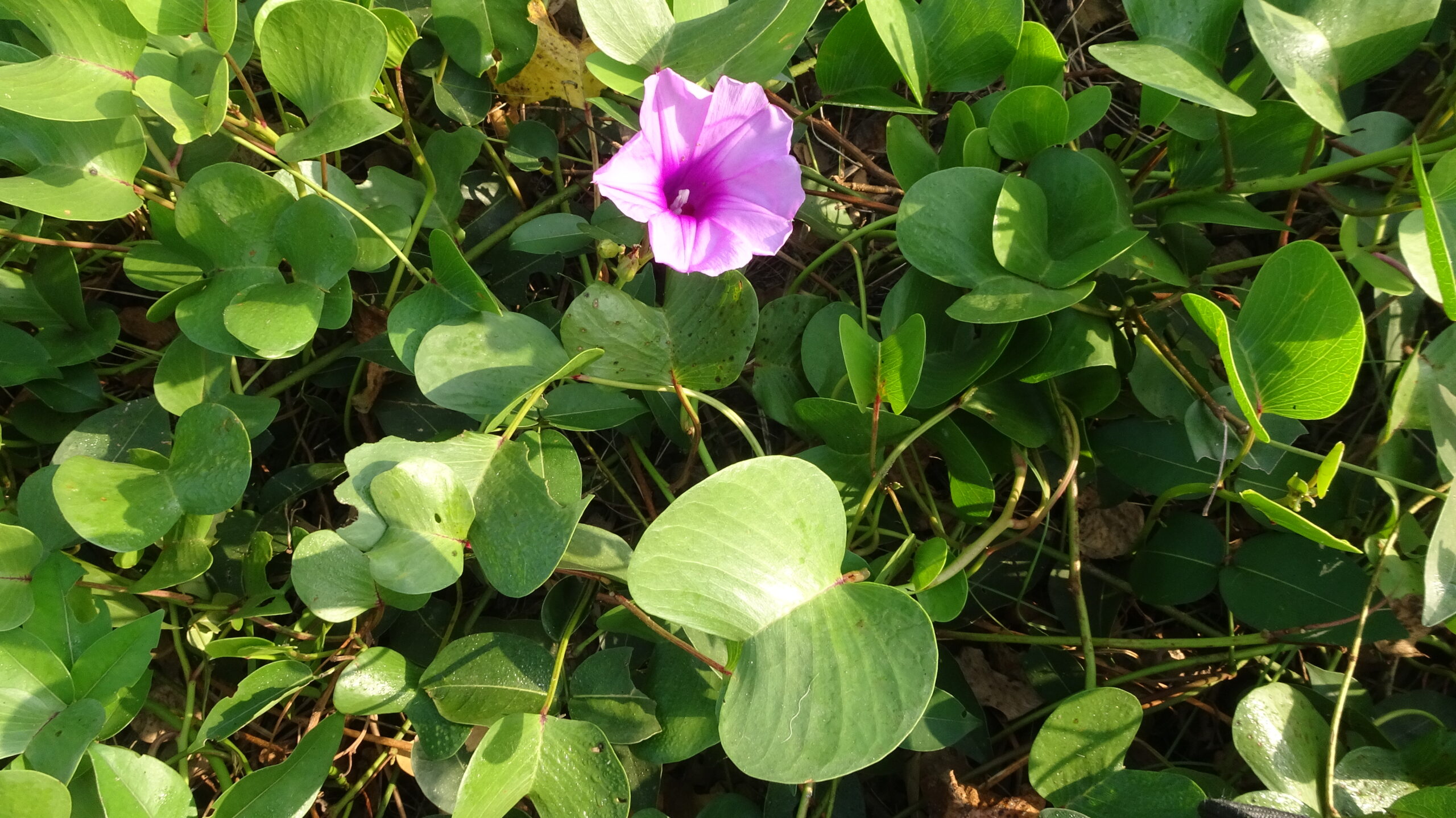
Common name: Goat foot vine. Tamil Nadu: Atampu This plant is a creeping prostrate evergreen vine and is commonly seen in coastal sea coast areas along sand bund. The flexible stem of this plant root freely at nodes and this helps the plant to freely branch in sandy areas. It forms extensive mats in beach … Read More “Ipomoea pes-caprae (Convolvulaceae- Morning glory family)” »
Category: Lianas and climbers
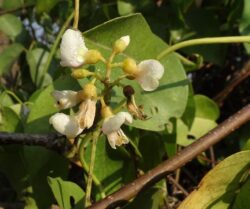
D trifoliata is scrambling glabrous plant seen in commonly in mangrove habitat areas of India. I encountered this plant at a place called Chorao in Goa. Leaves are arranged alternatively. The pinnate leafs are highly variable and generally seen with 3-5 leaflets. The leaves are ovate-elliptic in shape with acuminate tip and a rounded base. … Read More “Derris trifoliata (Fabacae-pea family)” »
Common name: Climbing Rex Begonia (but does not belong to Begonia genus). Tamil name Njerinjampuli. The plant is a large colorful perennial vine, stems are 4 ridged they appear rusty and have forked tendrils. The simple leaves are arranged alternatively. The lower side of the leaf is deep red in color; the upper side of … Read More “Cissus Javana (Family- Vitaceae-Grape family)” »
Tamil name- Onnan kodi. Ipomoea staphylina is an aggressive woody straggler of African origin. The simple leafs are arranged alternatively, the leaf shape is broadly ovate; leaf base cordate; apex acute and margin entire. The plant produces tubular funnel shaped flower which are pink in color. The plant aggressively runs over the surrounding vegetation and … Read More “Ipomoea staphylina (Family Convolvulaceae-Morning Glory family)” »
Tamil name: Pilacchivalli, yanai-t-tatippu. Spatholobus genus belongs to the pea family and consists of large lianas which are of South East Asian origin. S parviflorus closely resemble Butea monosperma (Plash tree) in general appearance. S. parviflorus is a very large woody liana and has extensive distribution all over India. The large leaves are trifoliate and … Read More “Spatholobus parviflorus (Fabaceae family-pea family)” »