Common name: Wild guava, Ceylon oak. Tamil name: Aima karikku, Puta-tanni-maram
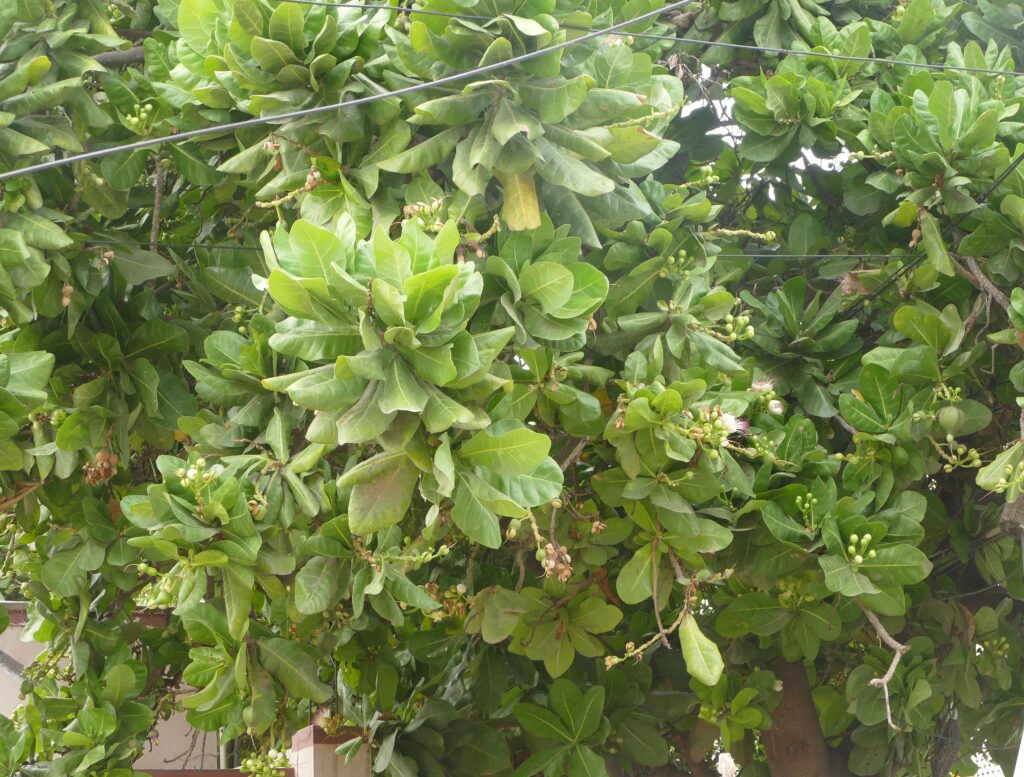
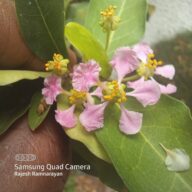
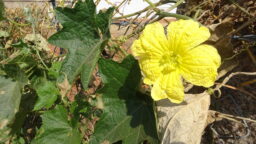
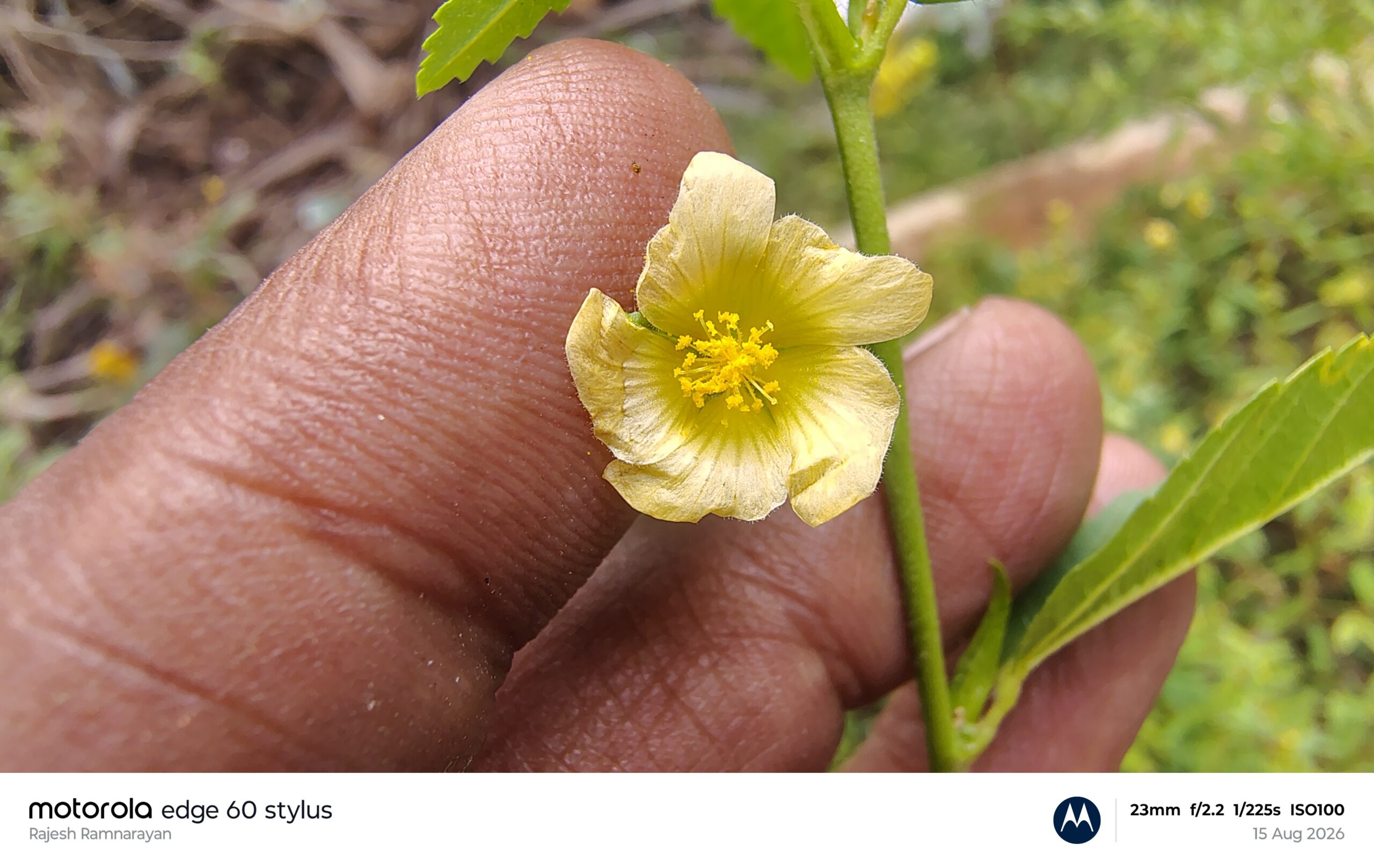
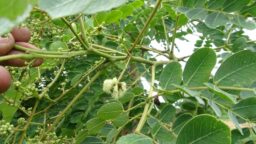
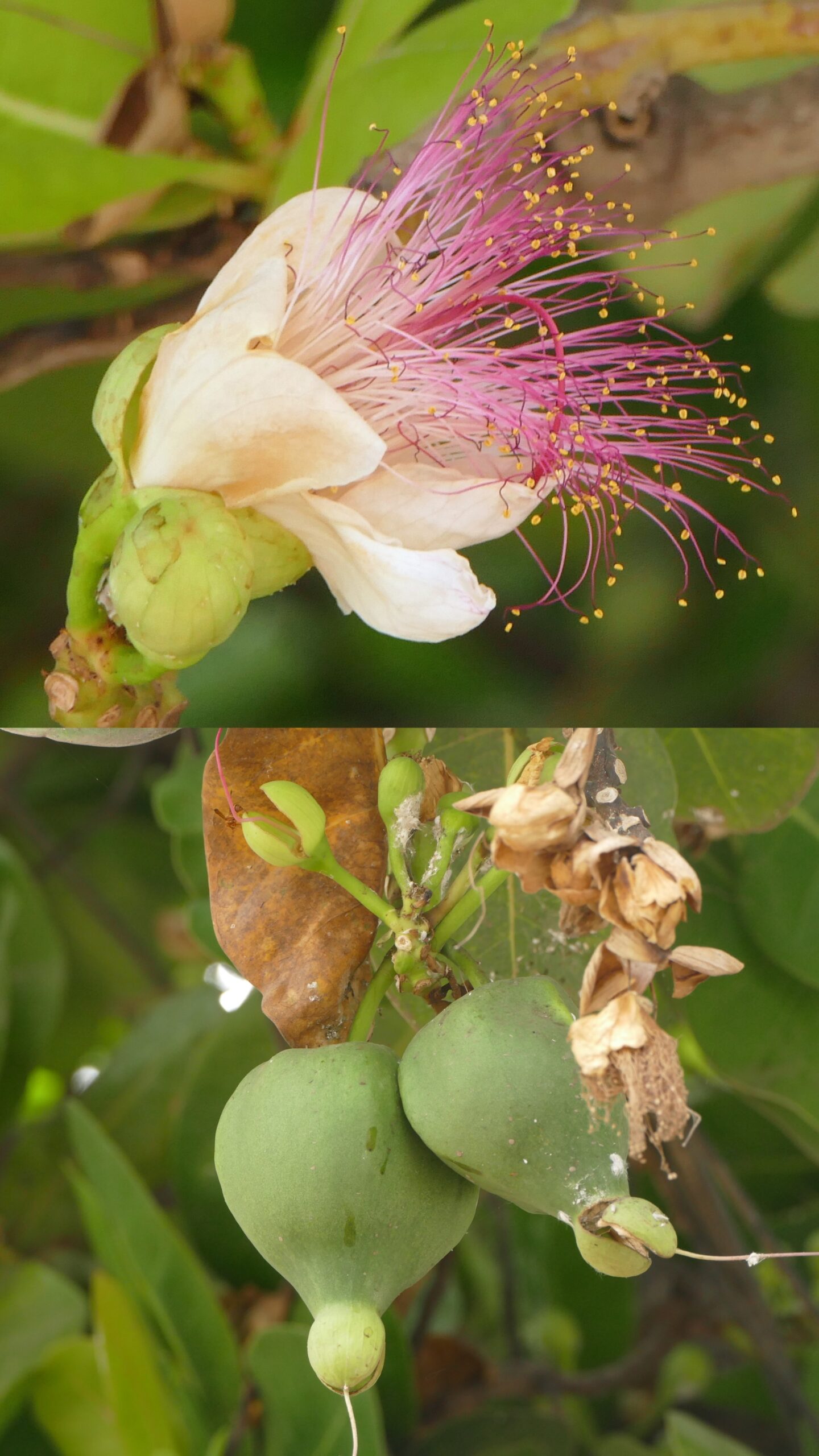
Wild guava is a deciduous tree native to the Indian sub-continent that grows to a height of about 12 meters. The central trunk is grey, intermittent black horizontal markings are seen. The bark is vertically slightly-fissured. The plant has a tendency to secret surface exudates from trunk. The simple alternate leaves are arranged in a spiral manner with leaves seen crowded at the end of branches. The leafs are leathery and smooth in texture. The upper side leaf surface is dark green and the lower light green. On the upper surface of the leaf the portions corresponding to the central leaf nerve appear white. On the below surface 11 pairs of leave nerves protrude out of the lamella. The leafs turn red and fall off. The leafs are obovate with a tapering base and a rounded tip. The leaf length measure around 37 cm and the leaf across measure around 19.50 cm. The inflorescence is in the form of a terminal spike containing about 10-15 flowers. The fragrant flowers are large and measure around 13.5 cm across, and have 4 distinct petals. The petals have a waxy smooth appearance and are whitish-yellow in color. The petals are obovate and each measure around 6 cm in length. The fruit is in the form of a roundish berry measuring around 7 cm in diameter and contain several seeds. The fruit is covered by the persistent calyx elements. The flowers are considered edible and the plant has several medicinal applications. Wild guava is the larval host plant for Grey count and Monkey puzzle butterflies.